Creativity does not get along with the procedures. Designers can create the most beautiful objects but when exporting them they have all to lose: they must go out to look for customers, spend prices, negotiate prices, fill a thousand forms, deal with legal and tax issues. Nothing more oblivious to his vocation.
Sandra Felsenstein (27) realized this detail, detected a niche and did not waste it. A year ago he founded Dinka, a startup that helps thirty designers sell their products abroad.
"They have an excellent vision for creating but the commercial link is usually their weak point. Furthermore, I always wanted to have a personal project. That's how the idea arose of combining what I know best, which is commercial and financial, with design, which I always liked."
He discussed his idea among some designers and found that their assumptions were true. Today he is running his own company with a capitalist partner who contributed forty thousand dollars.
He recruited the first designers, whom he calls partners, "by walking a lot. You have to go to the fairs and see the work." This is essential but it is not the only thing: "You also have to know the person, it is important that they are compliant and have a lot of energy."
Today she works with thirty designers offering contemporary jewelry, handbags, belts and clothing. “It's a good number, but we're always open to seeing new things.”
Felsenstein also has to take care of the other end, the most boring for creatives: the buyers. For that, he goes on business rounds, visits embassies and consulates, meets with commercial attachés and travels.
Latin America is the first step of the project. They have already exported twenty thousand dollars to Peru, Ecuador and Chile. Now they are going for more: “We are starting to sell to Spain and the US. The idea is to concentrate on this country and Europe.”
For now, they are already working with a woman in Texas who resells the products. Americans "are very interested in contemporary, handcrafted jewelry. They also look for leather handbags."
Felsenstein is an industrial engineer and before founding her own company she had a corporate life: she worked at Johnson & Johnson, a financial company and a consulting firm.
He does not lack knowledge or experience to take care of the economic issues of the venture. Dinka charges a percentage on sales that varies depending on the product and quantity. "The designers determine what they want to charge for their pieces and from there we establish the price. The idea is that the buyer, by combining their orders in a single shipment, takes advantage of the economy of scale. In the end it ends up being cheaper than if they had to contact the designers one by one."
The dollar also influences the equation but not as much: “We are no longer as cheap as before but good design is valued.”
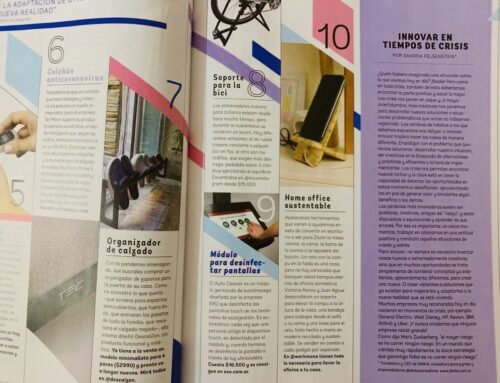
The Financial Times agrees: “Argentine design has a good reputation but the country's connections with the international craft trade are not very developed.” The English newspaper dedicated a long note to Felsenstein who, precisely, is developing connections with the world.
Cecilia Castro
cdecastro@clarin.com